Pick up dates first or read the guide below. 32 pickup points nationwide, most cars need no credit card, free cancellation up to 24 hours before pickup.
Updated 14 June 2026
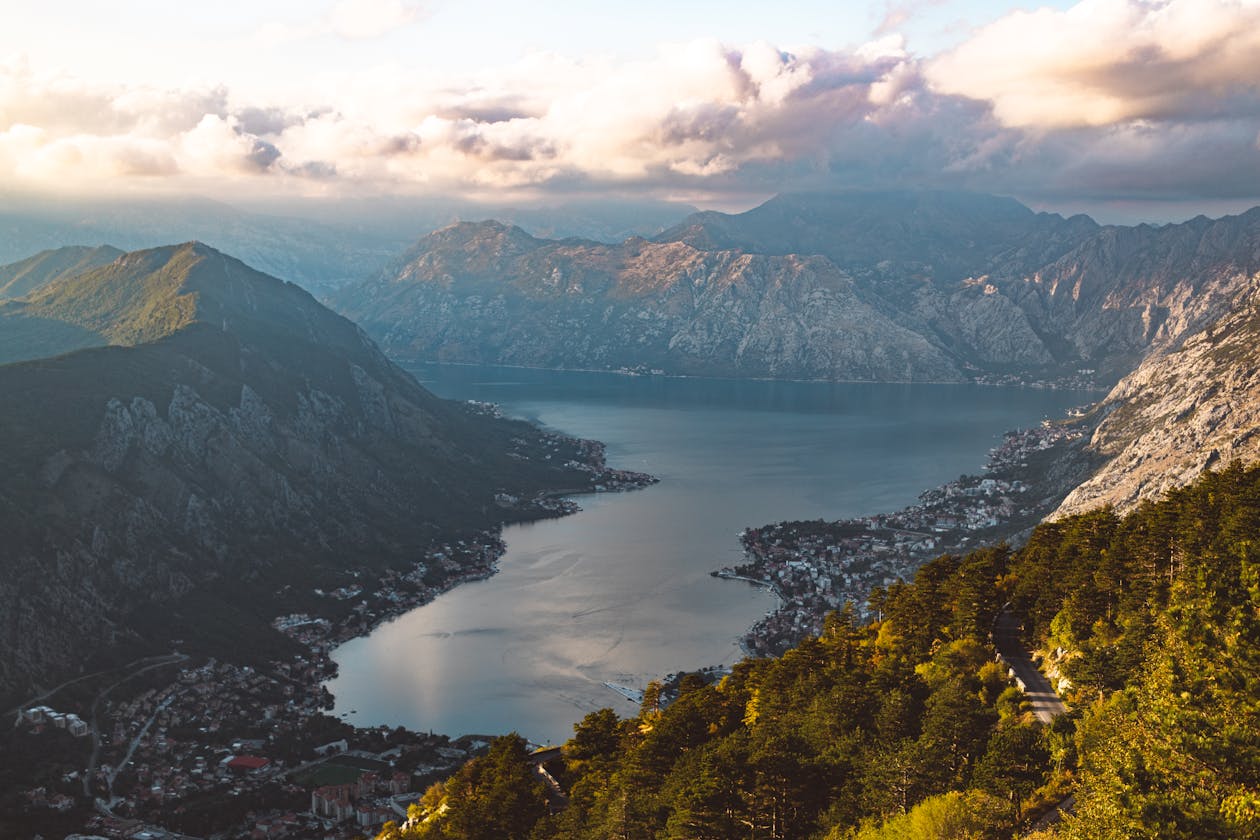
Montenegro rewards drivers. The Bay of Kotor at sunrise with almost no traffic on the Lovćen road, the canyon views dropping away on the route towards Durmitor, the raw stretch of coast approaching Ulcinj. None of it properly translates to a photo. If you rent a car in Montenegro to chase those roads, this is also a country that will catch an unprepared driver off guard: tight mountain switchbacks with no barriers, an alcohol limit so low it effectively means zero, and an insurance system where one undocumented scrape can cost you the full excess regardless of what level of cover you paid for. Most visitors fly into the coast and rent a car at Tivat Airport to start, and many hire a car in Kotor before heading straight up the Lovćen serpentine, so this guide covers what actually matters for 2026.
Quick Reference
Is it Easy to Drive in Montenegro as a Tourist?
For most tourists, yes. The main coastal highway and the A1 road south of Podgorica drive like any other European road: signed, surfaced and GPS-friendly. If you rent a car in Tivat or at Podgorica airport, you will be comfortable from day one.
A few things require specific preparation. The mountain road from Kotor up to Lovćen National Park is a genuine switchback challenge on first approach; most drivers handle it fine once they understand the uphill priority rule. Old towns are pedestrianised inside the walls, which means navigating to a car park rather than the destination. And the local driving culture operates on different assumptions to most of Western Europe: confident overtaking, minimal signalling, and a horn used as a safety warning rather than a complaint.
If you have driven in southern Italy, Greece or the Balkans, Montenegro will feel familiar. If your experience is mainly UK motorways or German autobahn, expect a more assertive road culture on the back roads. Preparation beats anxiety every time.
What Are Montenegro's Roads Really Like?
The Adriatic Highway (Jadranski put) threads the entire coast from Herceg Novi down to Ulcinj. It is dual carriageway around Budva and Tivat, and single-lane with hard shoulders nowhere in sight on the stretch between Petrovac and Bar. In July and August it gets genuinely congested: add 45 to 60 minutes to any coastal drive in the peak summer window, so if you arrange your car rental in Budva for a beach week, build that delay into your timings. Trucks hug the centreline on the narrow sections and there is very little room for error.
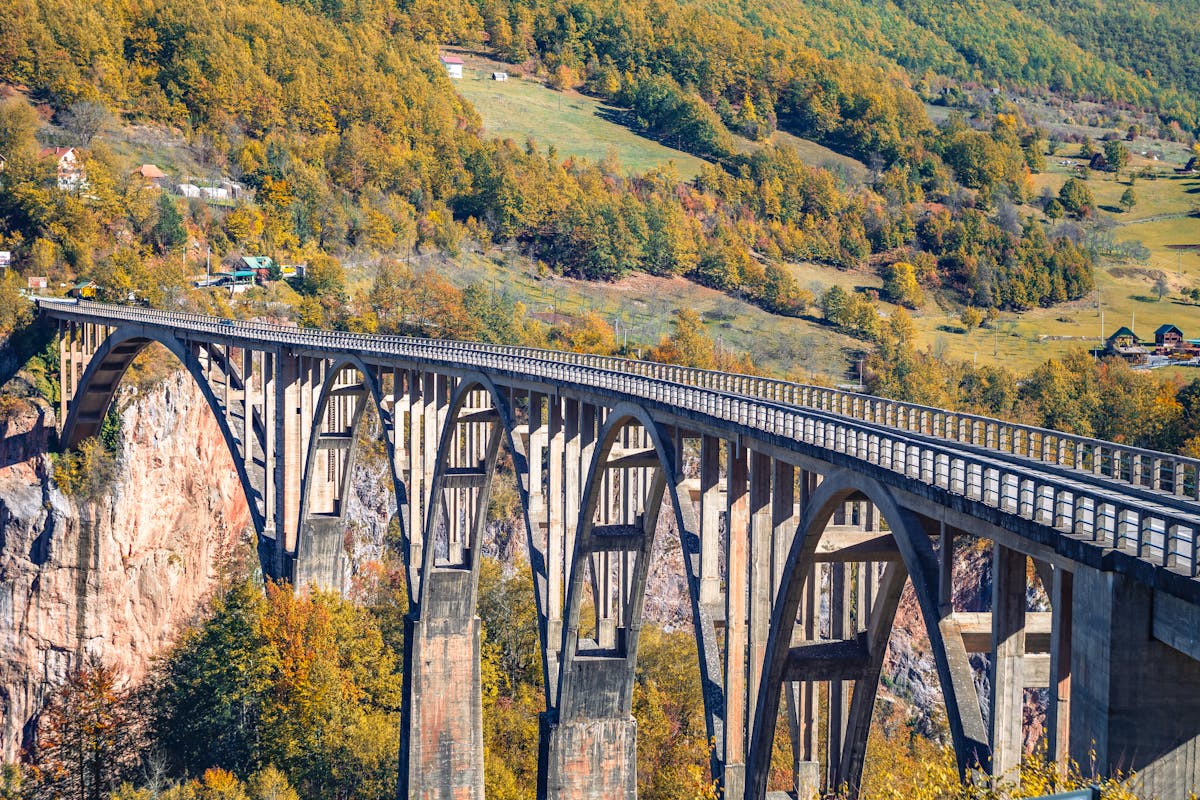
Inland is where Montenegro's roads become memorable in both senses. The road from Kotor up to Lovćen National Park climbs 25 hairpin bends on perfectly good tarmac that is very narrow in places: two cars pass, two buses do not. Durmitor sits at around 1,450 metres and the approach roads earn the word spectacular: unguarded drops, clear surfaces, and almost no traffic outside peak season. The Morača Canyon road (the main E65 linking the coast to Podgorica) is the busiest inland route and has a history of rockfall from the canyon walls. Drive it normally but do not stop in the narrows.
The motorway network is limited but genuinely useful. The A1 runs from the Sozina Tunnel near Lake Skadar to Smokovac south of Podgorica, cutting coast-to-capital driving to around 1h 15min from Tivat. A new 41km section extended this towards Mateševo in 2024. Construction on the next Bar-Boljare section is underway: a €694 million contract was signed with PowerChina in early 2026, so expect lane closures on the main approaches in places over the coming construction season.
Speed Limits, Alcohol and The Rules You Cannot Afford to Ignore
Montenegro's road law follows the standard continental European framework but is enforced more consistently than many visitors expect. The specifics:
- 50km/hUrban areas
- 80km/hOpen roads
- 100km/hCarriageways
- Blood alcohol limit: 0.2‰. That is one small beer for an average adult and you are already within range. The practical rule is none before driving.
- Headlights: dipped low-beam headlights are required at all times, day and night, all year. The fine is €30 and officers do check. Many rental cars have auto-lights; verify they are actually illuminated, not just set to auto standby.
- Mobile phones: hands-free only. Holding a phone while driving is a €60–150 fine. Police on the coastal road are actively watching for this in season.
- Seatbelts: compulsory for all occupants front and rear. Children under 5 require an appropriate child restraint system; under-12s cannot sit in the front passenger seat.
- Roundabouts: vehicles inside the roundabout have absolute priority over entering traffic. This is enforced with fines of €100–450 and Montenegrin drivers assume it without question.
- Right turn on red: not permitted unless a specific green arrow signal is lit. This catches drivers from countries where right-on-red is standard. Treat a red light as a full stop in all directions.
On-the-spot fines are standard practice. If you pay immediately the officer may apply a 30% reduction. Otherwise fines can be paid at a bank within 8 days, before you leave the country. For excessive speeding (71+ km/h over the limit) or aggressive behaviour the maximum can reach €2,000. Radar detector devices are illegal to carry in the car even switched off, fine €287 and confiscation.
Traffic Fines in Montenegro: What You Will Pay
Fines follow a fixed scale per offence. Pay by card on the spot (most officers carry a terminal) and you typically receive a 30% reduction. Cash paid directly to an officer is not a legal payment method. If no terminal is available, pay at any bank within 8 days before leaving the country.
Standard on-the-spot penalties: headlights off €30, seatbelt not worn €40–100, phone in hand while driving €60–150. Minor speeding runs €40–200; serious speeding (71+ km/h over the limit) or aggressive driving can reach €2,000. Failing to give way at a roundabout costs €100–450.
Exceeding the 0.2‰ alcohol limit starts at €70, above 0.5‰ arrest is possible. Radar detectors are illegal to carry even switched off: €287 fine and confiscation. Turning right at a red light without a dedicated green arrow signal: €50–150. For fines you cannot pay on the spot, pay at any bank within 8 days before leaving the country.
What Your Hire Car Must Carry
Every vehicle in Montenegro must carry a mandatory safety kit by law. Your hire car should have all of this. Do not assume, check:
- Warning triangle
- Reflective safety vest
- First-aid kit
- Spare bulbs
- Headlamp beam deflectors
15 Nov – 1 Apr: From 15 November to 1 April, winter tyres with a minimum 4mm tread depth are legally required. Snow chains must also be carried if you plan to drive mountain routes above 800m in that period.
If you are stopped and anything is missing, the fine falls on the driver, not the agency. The check takes two minutes. Skip it and you are taking the risk for someone else's oversight.
Mountain Road Etiquette
Montenegro's serpentine roads follow unwritten rules that every local driver knows and every visitor should learn before tackling the Lovćen switchbacks or the Durmitor approaches.
Uphill traffic has priority, on single-track mountain roads, the ascending vehicle goes first. The descending driver identifies a passing place and reverses into it if necessary. This is both the legal rule and universal practice; do not try to hold your ground going downhill. Sound your horn before tight hairpins with under 15 metres of visibility. A short tap warns oncoming traffic and is expected behaviour, not aggression.
Fold your mirrors on the narrowest passes. Around parts of the Kotor area vehicles pass with centimetres of clearance, fold both mirrors before you reach the tight section, not while you are in it. Give way to tour coaches early. In cruise season, large coaches run the Lovćen road continuously and know every centimetre of it. Pull well over when you see one coming and give them the full width. They will not slow down.
For route-specific notes on the Lovćen and Durmitor roads with kilometre markers and timing, see our Montenegro mountain passes guide.
Narrow Roads and Tight Streets in Montenegro
The historic centres of Kotor, Budva and Herceg Novi are fully pedestrianised inside the walls: no vehicles, no exceptions for tourists. Signage pointing to car parks appears on the approach roads. Follow it from the first sign you see; the roads narrow quickly after that point and there is nowhere to turn around near the walls. The nearest car parks to each old town are well-established and within a short walk of the main gates.
On mountain passes, sections of road narrow to a single effective lane. The vehicle going uphill has priority; the vehicle going downhill identifies the nearest passing place behind them and reverses into it without waiting to be asked. On the tightest sections above Kotor and on the Lovćen road, some bends require both vehicles to fold their mirrors to pass. Fold them before you reach the tight section, not while you are in it.
Residential zones are marked with a blue sign showing a house and child figure. Speed limit: 30 km/h. These zones are typically enforced by raised road tables rather than cameras. Watch for sudden zone entry signs in coastal villages between Budva and Ulcinj where residential zones begin without much warning.
Driving Culture: What Will Surprise You
Montenegro has a driving culture that operates on different assumptions to most of Western Europe. This is not dangerous if you understand it, it just means tourists who expect familiar road behaviour are caught off guard. These are the things experienced drivers consistently flag:
Overtaking on blind bends is normal local behaviour, drivers who know the road pass across solid white lines on mountain switchbacks. Don't match it. Stay hard right and treat every blind corner as having oncoming traffic. Locals also cut the geometric line through corners, crossing the centre to take a smoother arc. The response is the same: hug the right edge on every blind curve.
Headlights flashing from behind means 'let me past', not a warning. Ease slightly right so the driver can go around; they will stay on your bumper until you do. Indicators are treated as optional, leave extra following distance and treat every vehicle ahead as a potential unannounced turn. The horn is a safety tool: a short honk before a blind hairpin on a single-track mountain road is the standard warning to oncoming traffic.
The general pace is slow through towns, fast on open straights. If you are holding up traffic on an open road, ease right, drivers will wait for a clear straight and pass cleanly rather than forcing a dangerous overtake. Work with the flow rather than against it.
Seasonal Driving Conditions
Summer (June–September): peak season and peak traffic. The Adriatic Highway between Budva and Bar becomes stop-start from mid-July. Kotor can have four cruise ships in port simultaneously, flooding the approach road with day-trip coaches. Arrive at old-town parking before 9am or after 6pm in July–August, or expect a long walk from wherever you end up. One hazard that catches summer visitors off guard: after a prolonged dry spell, the first rain makes asphalt surfaces extremely slippery. Oil and rubber residue that has built up on the road surface forms a film when wet. Braking distances double on mountain switchbacks in these conditions, slow down earlier than you think you need to.
Winter (November–March): the coast stays relatively mild. Kotor and Budva rarely see snow at sea level, but mountain roads above 800m can ice overnight even into late April. The Durmitor plateau road can close entirely between December and March without 4WD and chains. Check the morning you plan to drive any high-altitude route, not the night before.
Spring and Autumn (April–May, September–October): the best driving windows. Traffic is lighter, mountain roads are clear, and the light on the Morača Canyon walls in autumn is genuinely worth the detour.
Livestock on the road is an everyday occurrence on inland routes and in the foothills around Nikšić, Kolašin and the Durmitor approaches. Cows, goats and sheep walk in the road, particularly in early morning and evening. Slow down, stop if the animal is blocking the road, give one short honk. Do not try to squeeze past a moving herd. If a shepherd is present, they will signal you through.
Night driving on unlit rural roads carries significantly higher risk than the same route in daylight. No crash barriers on drops, no road lighting, tight bends, livestock in the road and stray dogs combine into a situation that experienced drivers consistently flag as genuinely dangerous. The coast road and A1 are fine after dark. Inland mountain routes and the foothills are not worth the risk, if your destination requires driving one, plan to arrive before sunset.
Fuel, Tolls and What They Actually Cost
Fuel stations are plentiful on the coast and along the main highway. Coverage thins significantly inland: the last station before the Durmitor plateau is in Žabljak town, and the Kolašin-to-canyon road has nothing for around 40km. Fill up at the last main town before any mountain route.
Fuel grades: unleaded (bezolovni) and diesel (dizel), standard everywhere. Prices run roughly 5–10% below Western European levels. Self-service is the norm; older rural stations sometimes have attendants. Cards accepted at most stations; carry cash for smaller rural ones.
One specific note on fuel brands: several local drivers and mechanics warn against EKO-branded stations, citing fuel quality issues with European-engineered cars. Petrol, Lukoil and Hifa Oil are reliable alternatives. At smaller rural stations, card payment may not be accepted, keep €20–40 in cash in the car as fuel emergency money at all times.
Travelling with an electric vehicle is not recommended for trips outside the coast. Public charging infrastructure is sparse and largely absent on mountain routes and in the north. If you are hiring a car and want to visit Durmitor, Prokletije or the Piva Canyon, choose a petrol or diesel vehicle.
What the tolls cost (2026):
- €2.50Sozina road tunnelLake Skadar to coast
- €4–5Kamenari–Lepetane ferryBay of Kotor crossing · saves 30km · runs 6:00–midnight
- €3.50A1 roadSmokovac–Mateševo section, 41km
Montenegro has no vignette system. You only pay at the three toll points above. No windscreen sticker is required.
Parking in Montenegro: Old Towns, Zones and Costs
The historic old towns (Kotor, Budva, Herceg Novi) are pedestrian-only inside the walls. Park outside and walk. In Kotor the nearest lot to Stari Grad is on the north side of the walls, a five-minute walk from the main Vrata od Mora gate. Budget €3–4 per hour.
Street parking in most Montenegrin towns runs on a coloured-zone SMS system: send your registration plate (no spaces) to the number on the zone sign and the charge is billed to your phone. Note that Kotor does not use this system, paid parking there is at the designated car parks only and street parking with designated white lines. For other towns the complication is that the SMS system requires a local Montenegrin SIM from m:tel, Telenor, or One. Foreign SIM cards and EU roaming do not work with it. If you are staying a few days, a prepaid local SIM costs around €5 and solves this entirely. The Digitalni Kiosk app also works and accepts card payment.
Unpaid parking in a paid zone: €50 daily fine. Enforcement is active in Budva and Kotor during peak season. Montenegro uses a SPIDER tow system: illegally parked cars are physically removed, not just ticketed. Recovery costs €100 or more plus the original fine, and you collect the car from a compound outside town. If your car has disappeared from where you left it, call 122 before assuming theft.
GPS and Navigation: Plan Before You Drive
Google Maps works well on the coastal highway and the A1 motorway. Off those routes it has three specific failure modes worth knowing. First, it cannot distinguish a sealed road from a rough 4x4 track and will route you confidently down either. Second, road closure data updates slowly: a closed mountain road may remain on Google as an open route for months after the closure. Third, it tries to send drivers through the pedestrianised old town of Kotor: if your destination is inside the walls, ignore the app entirely and follow the parking signs for the north or south car parks.
Download offline maps before you leave any area with reliable WiFi. Mobile data is unavailable in the Tara Canyon, around Durmitor and in large stretches of Prokletije. Google Maps offline covers you on the main routes. The free Maps.me app (fully offline, OpenStreetMap data) is worth installing alongside it: it marks unpaved tracks clearly as tracks rather than roads, which Google frequently does not.
Road closures are common on inland routes, particularly after winter or heavy rainfall. Before any mountain or rural drive, check current conditions at amscg.org the Montenegrin automobile association updates road conditions promptly. Your accommodation will also have reliable local knowledge: ask the evening before you travel.
For mountain routes, do not assume the route you planned the night before is still passable in the morning. Conditions change overnight and local knowledge beats any app.
Crossing into Croatia, Albania or beyond? Read our cross-border permit guide before you leave Montenegro.
Decide where to start your trip: you can pick up your rental car at car rental locations across Montenegro including both airports and the main coastal towns.
Frequently Asked Questions About Driving in Montenegro
Do I need an International Driving Permit?
If your licence is printed in Latin script (UK, EU, US, Canada, Australia) you do not legally require an IDP for Montenegro. If your licence is in non-Latin script (Arabic, Chinese, Thai, etc.) an IDP is required. For any non-EU visitor, getting one before you travel is cheap insurance against complications at checkpoints or with rental agencies.
Can I take the hire car across the border?
Yes, cross-border permits are available for Croatia, Bosnia, Albania, Kosovo and Serbia, and can be added during the booking process. There is an additional charge per country. The permit includes the Green Card insurance extension you need for each destination. Do not cross any border without the permit in the car: travelling without written authorisation voids your insurance for the entire trip. Add the countries you need at the time of booking so everything is ready when you collect the car.
What do I do if I have an accident?
Call 122 (police) immediately, even for a minor bump. Do not agree to any private settlement with the other driver. Photograph the scene from multiple angles before anything moves. Wait for the officer, get the police report (Zapisnik), and keep a copy. That document is what makes any insurance claim valid. Without it, all coverage is void.
Is driving safe at night?
Coastal roads and the main highway are fine after dark. Mountain switchbacks, Lovćen in particular, are better done in daylight until you know the road. On unlit rural routes, drop your speed after dark: deer are common on mountain roads and step out without warning.
What documents must I carry in the car?
You are legally required to carry: your passport or national ID (Montenegro requires ID separate from your licence, not just the licence itself); your driving licence; the full printed rental contract; the insurance or Green Card document (check it is in the glove box folder when you collect the car); and the vehicle registration document. At a police checkpoint expect to present all of these. If anything is missing from the folder when you collect the car, ask for it before you drive away.
Can I pick up in one Montenegro city and return in another?
Yes. One-way car hire is supported between any of the 32 Montenegro pickup points. Drop-off fees depend on distance and supplier and are shown at checkout before payment. See one-way car rental across Montenegro for the full network and fee brackets.
Match the car to the terrain you will tackle, from coast roads to mountain passes.
Unlimited miles on most cars