Updated 24 September 2026
Can I Take My Rental Car Across Montenegro's Borders?
Yes. Cross-border car rental from Montenegro to Croatia is available, with the same cross-border fee covering Bosnia and Herzegovina, Albania, Kosovo, and Serbia. Tick the country at booking and the rental agent prepares the paperwork before you collect.
What is a Green Card (zelena karta)?
A Green Card is an international motor insurance certificate that proves your vehicle is insured in the country you're entering. It's commonly required when taking a rental car across borders in the region. This guide covers cars rented in Montenegro, on Montenegrin plates. If you are driving in from another country in a vehicle registered elsewhere, the rules are different and depend on where it is registered, so check with your own insurer before you travel.
You don't arrange the Green Card yourself; the rental agent sets it up when you tick each destination country at booking. For Croatia, Bosnia and Serbia no Green Card is required at all, while for Albania and Kosovo the Green Card is provided, so the cover is in place before you collect the car.
A cross-border fee is added at booking for every country you take the car to, with the price shown at checkout. Croatia, Bosnia and Serbia need no Green Card, but the fee still applies; "no Green Card" means there is nothing extra to arrange, not that the crossing is free.
Tick every country you plan to enter when you book your rental. Adding a country mid-trip may not be possible at the border, so select all your destinations upfront and we'll have the paperwork ready when you collect.
Not sure which countries to tick? Get in touch and we'll help you choose the right cross-border option.
Documents You Need at the Border
The insurance is only half the job; the other half is paperwork. Officers at every Western Balkan crossing ask for the same five things: a valid passport or EU ID card, your driving licence (an international licence is accepted), the original rental contract rather than a photocopy, the Green Card insurance certificate, and the vehicle registration document that comes with the car. Keep them together in the glovebox so you can hand the whole set over at once.
Border Crossings from Montenegro
With insurance and documents sorted, here's what to expect on each route into the neighbouring countries.
Croatia
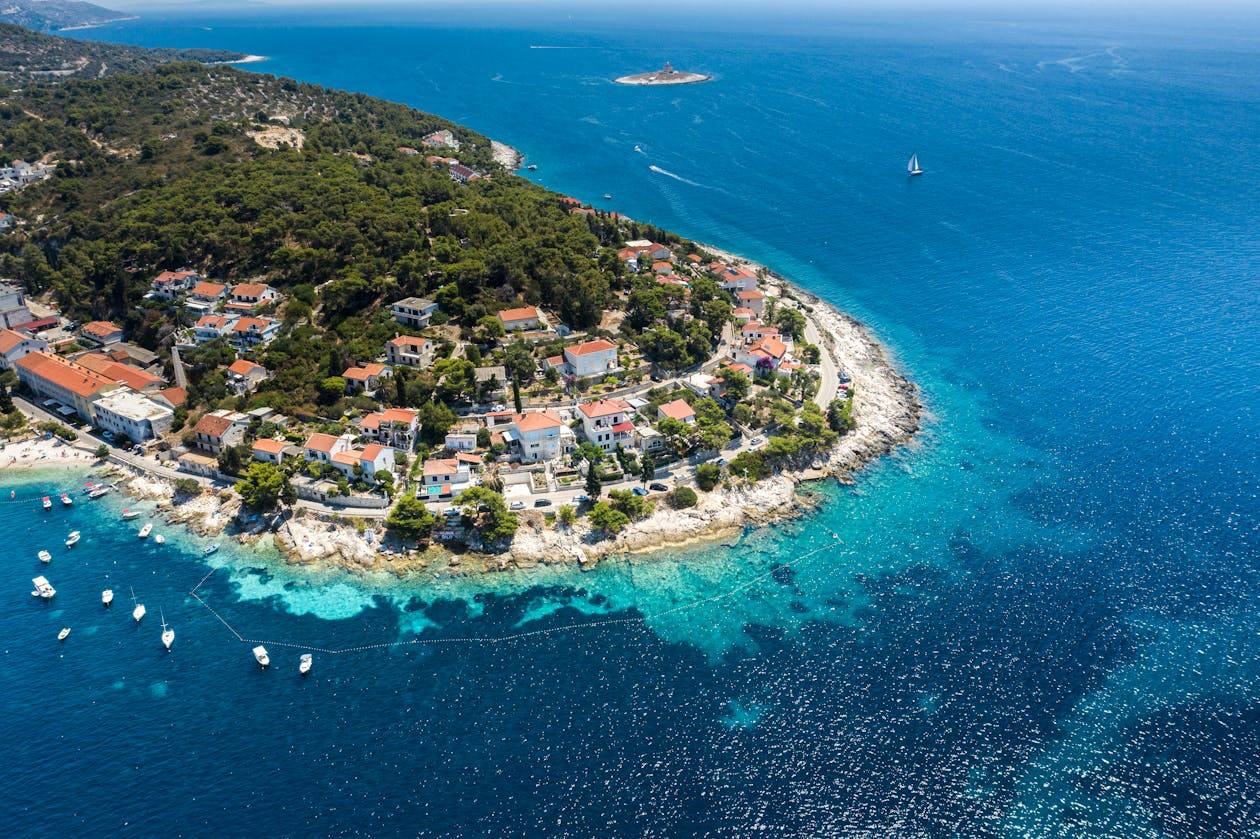
The most popular crossing for tourists. The main checkpoint is at Debeli Brijeg on the coastal road (E65) between Herceg Novi and Dubrovnik. This crossing gets extremely busy in summer, expect queues of 1-2 hours during peak season (July-August). No Green Card is required for Croatia; it is covered by the standard cross-border fee you add at booking.
Best times to cross: early morning (before 8am) or late evening (after 8pm). Weekday mornings are significantly quieter than weekends.
From the border, the coast road runs through Herceg Novi and round the Bay of Kotor to Kotor and Tivat. Many visitors fly into Dubrovnik Airport and drive south into Montenegro.
Albania
Two main crossings: Sukobin/Muriqan (coastal, near Ulcinj) and Hani i Hotit (inland, near Skadar Lake). The coastal crossing is more traveller-friendly and typically has shorter wait times. Albania needs a Green Card, which comes with the cross-border fee when you add the country at booking.
Note: Albanian roads differ significantly from Montenegro. Drive cautiously, especially on rural roads.
Bosnia & Herzegovina
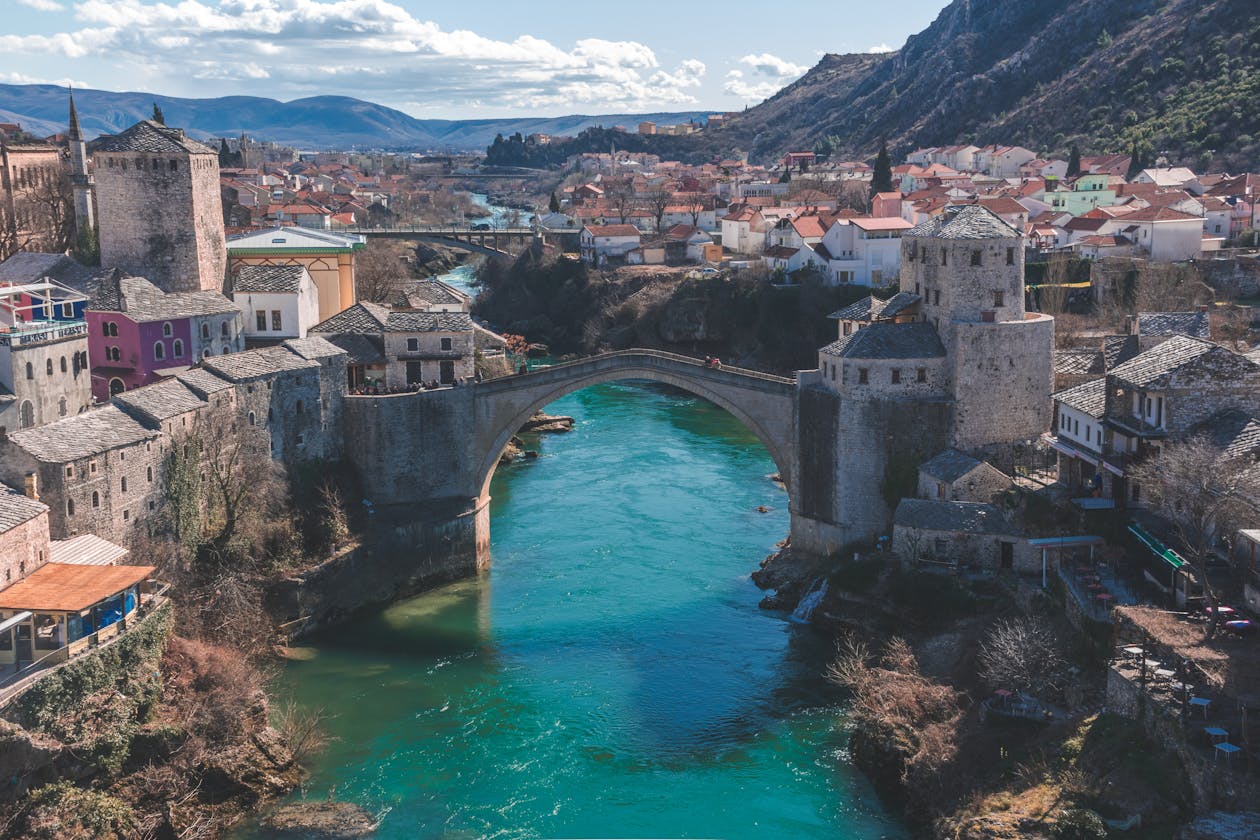
The main crossing is at Šćepan Polje (near Foča) if heading north toward Sarajevo, or Vilusi from Nikšić if you're going to Trebinje. Bosnia and Herzegovina needs no Green Card; it is covered by the standard cross-border fee you add at booking. Crossings are quiet outside July and August. Bosnia uses the convertible mark (BAM), though euros are widely accepted near the border, and roads are mountainous so the driving is slower than the map suggests.
Serbia
Cross at Dobrakovo on the E65, around 20 km north of Bijelo Polje, which feeds directly onto the Serbian motorway system towards Belgrade. Serbia needs no Green Card; it is covered by the standard cross-border fee you add at booking. You'll need a motorway vignette, bought at the petrol station immediately past the border, cash or card. Serbia enforces a zero-alcohol limit for drivers with random tests, and document checks here tend to be more thorough than at other Western Balkan crossings.
Kosovo
The crossing at Kula (near Rožaje) connects to Peja/Peć in northern Kosovo, with Pristina about three hours further. Add Kosovo at booking and the cross-border fee includes the Green Card, so the cover is arranged before you collect the car. Pick every country you plan to visit upfront, since adding one at the border may not be possible. Kosovo uses the euro despite not being in the EU.
Live prices for your exact dates.
Free cancellation 24h before pickup
Driving Rules That Change at Borders
Traffic rules shift the moment you cross a border. Croatia requires headlights on day and night and charges motorway tolls. Albania runs lower speed limits on rural roads, where surface quality varies a lot. Bosnia makes winter tyres compulsory from November to April and expects a first-aid kit and warning triangle in the car. Serbia enforces a zero alcohol limit for drivers and needs a motorway vignette. Kosovo keeps to the right and advises an international driving permit.
Popular Cross-Border Routes
Most cross-border trips fall into a handful of well-worn routes. Tivat to Dubrovnik is the scenic favourite, about two hours along the coastal E65 with a single border crossing. For Bosnia, rent a car in Kotor and the Mostar run takes three to four hours via Trebinje and ends at the famous bridge. Budva to Shkodër in Albania runs around two and a half hours over the Ulcinj coastal crossing, while the Belgrade run is five to six hours up the E65 north, best begun by renting a car at Podgorica Airport. For travellers arriving from Croatia, you can also rent a car from Dubrovnik to Montenegro at the Debeli Brijeg crossing, about 30 km to Herceg Novi. If you are still deciding where to fly in, see which airport is best for Montenegro, with Tivat, Podgorica, and Dubrovnik weighed side by side.
Tips for Smooth Border Crossings
A few habits make crossings painless. Have every document in hand before you reach the booth rather than hunting for them at the window, and switch the engine off in slow queues. Summer weekends are the worst; weekday mornings move far faster, and the Croatian coastal crossing at Debeli Brijeg is always the busiest, so an inland crossing is quieter when you have the choice. Keep some euros in cash for tolls and small purchases, and check that your mobile plan covers the country you're entering before you count on roaming.
Driving into Croatia from Montenegro? Live webcams at the two coastal border crossings, Debeli Brijeg and Kobila / Vitaljina, show the current queue and approach traffic before you leave. Feeds come from HAK (Croatian Auto Club) and refresh every minute, so you can check the real-time border wait time from Herceg Novi, Kotor or Tivat. Queues are usually longest in July and August on Saturday changeover days, when waits at Debeli Brijeg can exceed an hour.
Phone signal and data at the border
Your phone switches networks the moment you cross, and that is where costs turn unpredictable. Montenegro sits outside the EU, so an EU plan that roams freely in Croatia often stops being free as soon as you come south, and a Montenegrin SIM starts roaming the moment you enter Croatia, Bosnia or Albania. Check what your own plan actually covers before you count on it at a crossing.
Data earns its keep at the crossings themselves. Waits at the main posts swing from a few minutes to a couple of hours depending on the day and the season, and being able to check live traffic or look up one of the smaller alternative crossings while you are still deciding is what saves the afternoon.
Download offline maps for both countries before you set off, because coverage right at the border posts can be poor on either side. One thing worth being clear on: a Montenegro data plan covers you in Montenegro only, so if you are spending real time over the border you want a regional plan rather than a single-country one.
What car insurance do I need for cross-border drives?
In Montenegro itself the free Minimum tier handles third-party liability on every booking. The roughly €100 cash deposit is normally held for the trip, though a cross-border leg can change how the supplier processes it depending on where you are headed. Paid upgrades cut that exposure: Basic brings collision-damage cover with a capped excess, Full lowers driver liability, and Full Coverage Plus clears the deposit with zero excess. Drivers heading into Croatia, Bosnia, Albania or Serbia often pick the no-deposit tier, since cross-border claims paperwork moves slower than a domestic one.
Cross-border drives also affect which exclusions apply: damage caused on unsealed roads outside Montenegro and traffic violations in the destination country are handled differently per supplier. The cross-border car rental insurance guide covers how each tier behaves across borders, the deposit holds applied at pickup, and the claims process if anything goes wrong en route.
Cross-border FAQs
Cross-border drives generate more pre-booking questions than any other Montenegro rental scenario. The answers below cover what travellers most often ask before they confirm; permits, insurance, drop-off, and the practical realities at the major crossings.
Can I drive a rental car outside Montenegro?
Yes. Driving a Montenegro rental car outside the country is allowed once you add a cross-border fee at booking. The tiers reach from the immediate neighbours (Croatia, Bosnia and Serbia) out to Albania, Kosovo, Macedonia, every EU country and Switzerland, with the Green Card covered by the fee where required. Croatia is the most common destination and the fee is normally added instantly; the amount depends on the car and supplier and is shown at checkout. The car must be returned to a Montenegro pickup point, but you are free to cross any open border during the rental.
How does the cross-border fee work?
Three tiers of cross-border fee are available, based on which countries you need access to: tier 1 covers Croatia, Bosnia and Serbia (no green card needed); tier 2 adds the green card extension; tier 3 covers Albania, Kosovo, Macedonia, all EU countries and Switzerland. The right tier is auto-selected from the destinations you tick during booking, and the price is shown before you confirm.
Do I need a green card for Bosnia and Herzegovina?
No green card paperwork is required from you. The tier-1 cross-border fee covers Croatia, Bosnia and Serbia without a green card; the tier-2 and tier-3 fees include a green card automatically. Whichever tier you select at booking is the only thing you need to arrange. Just show the rental agreement and the cross-border authorisation at the crossing.
How long is the wait at the Debeli Brijeg crossing in summer?
Peak summer Saturdays (mid-July to late August) can run 60 to 120 minutes during the 10:00 to 14:00 changeover window. Off-peak Saturdays and any weekday outside July and August are usually under 20 minutes. The Karasovici crossing 12 km north of Debeli Brijeg is often faster as a backup if the main crossing is queueing.
Which Montenegro border crossings are open 24/7?
Debeli Brijeg (Croatia) and Sukobin (Albania) operate 24 hours. Hum (Bosnia, via Trebinje) is open 24 hours but with limited night staffing. The smaller crossings (Kula-Cakor for Kosovo, Hani i Hotit for Albania, and some Serbia crossings) typically close overnight 22:00 to 06:00.
Can I drop the car off in Dubrovnik or another country at the end of the trip?
No. Cross-border drop-offs are not supported, even for Dubrovnik which is the most common request from coastal Montenegro renters. Cars rented from Montenegro must be returned to a Montenegro pickup point. One-way drops within Montenegro are fine across all 32 pickup points; only the cross-border return is excluded. If you fly out from Dubrovnik, you can return the car at Tivat Airport (TIV) or Herceg Novi and take a transfer or bus across the border for the flight.
Can I rent at Dubrovnik Airport and drive into Montenegro?
Yes. Picking up at Dubrovnik Airport (DBV) and driving south into Montenegro is one of the most popular ways to visit, since many travellers fly into Dubrovnik rather than Tivat or Podgorica. You collect at the terminal, cross the border into Montenegro for your trip, and return the car to Dubrovnik Airport for your flight home. See Dubrovnik Airport car rental for pickup details and live prices.
Reserve your car with the cross-border Green Card included, ready for Croatia, Albania and Serbia, plus the EU and Switzerland with the right permit.
Green Card arranged before you collect